Equipment you no longer need can still change a life. Submit details — no obligation.
Trained healthcare professionals across Nigeria stand ready to serve but lack the tools to do so. Meanwhile, hospitals and manufacturers retire functional equipment each year. Fairmountains connects these two realities — responsibly, accountably, and with lasting results.
"A donation should begin with need, not availability — so every accepted item has a credible path from assessment to safe and sustained use."
A well-intentioned donation can create an additional burden when the receiving facility lacks the right power supply, trained personnel, physical space, consumables, spare parts, or technical support. Equipment may remain boxed, break down quickly, or become unsafe to use.
Fairmountains starts with the healthcare need and the receiving facility's readiness before recommending a placement. We assess the equipment and the proposed host facility as two parts of the same decision — protecting the donor's intention, the facility's resources, and the patients who will ultimately depend on the equipment.
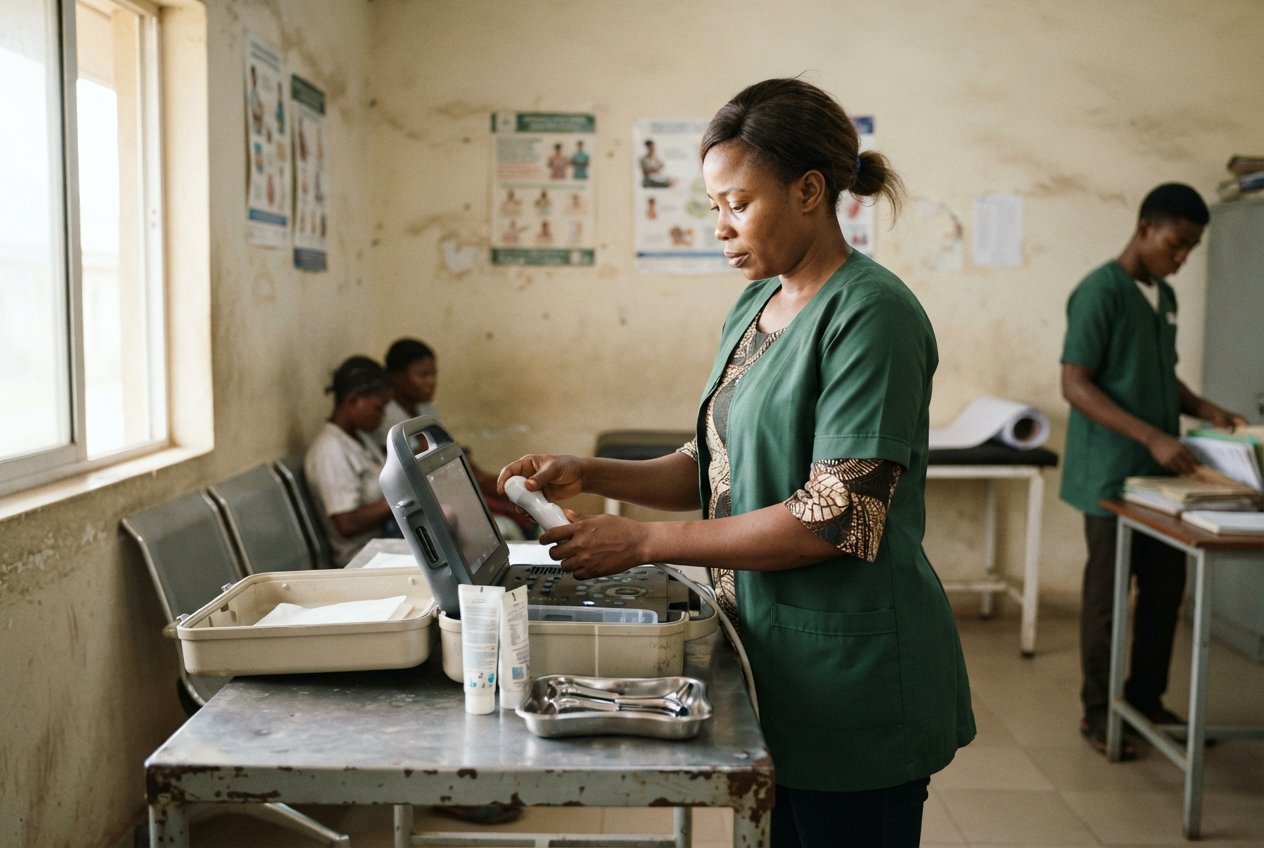
Our work does not end when an item arrives. We coordinate assessment, facility matching, deployment, installation, asset tracking, maintenance planning, and impact reporting — so that a donation becomes a dependable healthcare resource.
Every proposed donation is reviewed for suitability, safety, regulatory compliance, and sustainable use — before either party commits resources.
Clinical need assessed before any placement
Facility readiness verified independently
Every accepted item documented and tracked
Maintenance and support planned from day one
We view every donation as an opportunity to expand a service, support a healthcare worker, reduce delay, and bring care closer to a community. Our role is to help turn that opportunity into a practical and accountable outcome.
A functional patient monitor can strengthen observation and enable faster clinical decisions when a patient deteriorates.
A reliable autoclave supports sterilisation procedures that protect patients and staff from healthcare-associated infections.
A dependable oxygen concentrator can make the critical difference when a patient arrives with severe breathing difficulty.
Basic laboratory and maternal health equipment reduces unnecessary referrals and keeps patients within their local health system.
We welcome conversations about functional new, surplus, refurbished, or responsibly decommissioned equipment. Acceptance is always subject to technical assessment, regulatory requirements, facility demand, logistics, and availability of appropriate support.
Essential tools for everyday diagnosis and examination in primary care settings.
Devices that support patient observation and emergency response in clinical settings.
Equipment that strengthens care before, during, and after childbirth — with particular value in facilities serving rural communities.
Diagnostic and sterilisation tools that expand what a clinic can safely test and treat in-house.
Supporting infrastructure that improves patient comfort, workflow efficiency, and clinical capacity within the facility environment.
Reliable power is a prerequisite for functional medical equipment. These systems address one of the most common barriers to sustained equipment use in Nigerian facilities.
High-complexity equipment requiring substantial infrastructure, specialist engineering, and regulatory compliance before deployment can be considered.
Specialist devices that require intensive care infrastructure, trained intensivists, and biomedical support capacity before safe deployment.
We do not accept equipment simply because it is available. Declining an item does not question the donor's generosity. It protects the purpose of the donation — and the patients who depend on it.
Unsafe, severely damaged, contaminated, or incomplete equipment that cannot pass a basic safety review
Obsolete devices with no available spare parts, consumables, or qualified servicing options in Nigeria
Items lacking essential technical documentation, service history, or operating manuals
Equipment depending on proprietary support that cannot be independently secured in-country
Items with disproportionate transport, installation, or ongoing costs relative to clinical benefit
Pharmaceutical or consumable products outside our current programme scope
Our responsibility is to ensure that every accepted item has a credible path from assessment to safe and sustained use. A more thorough review at the beginning reduces waste, protects patients, and creates stronger evidence of impact.
It also gives you greater confidence that your contribution will be treated as a healthcare asset — not as discarded inventory.
We may also decline equipment that, even if functional, does not match current facility demand or cannot be supported reliably in the deployment environment.
A clear, structured process protects your donation, the receiving facility, and the patients who will depend on the equipment.
Complete a short equipment form with the device name, manufacturer, model, quantity, location, age, condition, accessories, service history, and preferred timeline. This allows an initial suitability review before either party commits resources.
Submit the formOur team and technical partners review the information. Where necessary, we request further documentation, photographs, a video demonstration, inspection reports, or maintenance records. We also confirm whether spare parts, consumables, and technical support can be secured in Nigeria.
We identify a healthcare facility based on clinical need, patient demand, staffing, infrastructure, space, power supply, and readiness to use and care for the equipment. A facility does not receive equipment merely because it asks.
Before collection or shipment, Fairmountains, the donor, and the receiving facility clarify responsibilities for documentation, packaging, transport, insurance, customs, installation, training, maintenance, reporting, and associated costs. This prevents uncertainty and protects all parties.
We coordinate movement, receipt, installation support, basic testing, asset registration, and documented handover. Where specialist installation or calibration is required, the equipment will not enter clinical use until that technical work is complete.
After handover, we track location, operational status, maintenance history, and reported use. Donors receive agreed updates showing the status and practical contribution of the donated asset.
See how we track impactWe will not accept equipment solely to increase the items associated with our programme. Where a donation proceeds, we document it, identify the proposed placement, clarify the plan, and maintain an appropriate record of handover and follow-up.
A clear answer on whether the proposed donation is appropriate — with an explanation if it is not.
You will know where the equipment is going, why that facility was chosen, and what the implementation plan is.
We agree reporting arrangements before deployment — not after. Public acknowledgement or discretion, both are handled with care.
We work with your organisation's compliance, documentation, and approval requirements — including formal donation agreements, inventory schedules, and photographic evidence.
Hospitals, manufacturers, distributors, and equipment owners can offer functional equipment for assessment and responsible placement.
Submit detailsFoundations, companies, philanthropists, and diaspora groups can support the practical cost of transporting, installing, or maintaining approved equipment.
Discuss fundingBiomedical engineers, technicians, and service organisations can contribute inspections, calibration, training, spare parts, or remote technical guidance.
Offer expertiseA partner may support an agreed package of equipment and implementation services for a named facility, community, or service line — subject to assessment and a clearly defined scope.
Discuss sponsorshipWhether you represent a hospital replacing equipment, a manufacturer managing surplus stock, a foundation funding healthcare access, or an individual with a credible donation opportunity — the first step is simple.
We will review the information and confirm the next appropriate step within two working days.
With the right assessment, placement, technical support, and accountability, it can strengthen a healthcare facility and help patients receive care closer to home. Let us examine the opportunity together.